Mission & History
Chair
- Sharon A. Jansa (jansa003@umn.edu)
Members
|
|
|
C. Hart Merriam Award
In 1974, the American Society of Mammalogists established the C. Hart Merriam Award to honor outstanding contributions to mammalogy through research, teaching, and service (Journal of Mammalogy 55:694, 1974). In 1996, the Board of Directors amended these criteria so that the award is now given in recognition of outstanding research in mammalogy. Nominees are typically established scientists who are actively engaged in research and who have made significant contributions to the science of mammalogy over a period of at least 10 years. The recipient is invited to address the Society in a plenary session at its annual meeting, as well as to prepare a manuscript for publication in the Journal of Mammalogy that is based on this presentation.
Nominations for the Merriam Award will be considered without regard to national citizenship and activity in the Society. Click here to see previous awardees.
2024 C. Hart Merriam Award Recipient
The C. Hart Merriam Award is given to eminent scholars in recognition of outstanding research in mammalogy over a period of at least 10 years. The 2024 recipient is Dr. Felicia Keesing.
|
Image
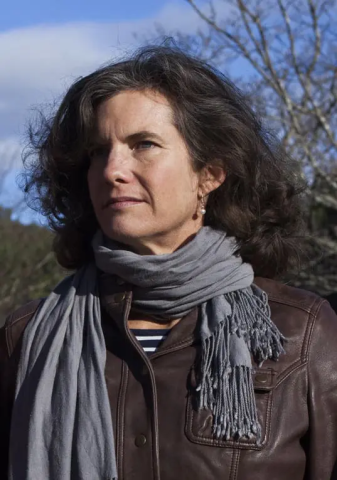 |
Dr. Keesing has made outstanding scientific contributions by using mammals as model organisms to investigate important questions in ecology and disease dynamics. Dr. Keesing lists 109 publications, many in high-profile journals such as Science, PNAS, and Ecology Letters, but also in core disciplinary journals such as Ecology and The Journal of African Ecology. She has won a Guggenheim Fellowship and has several federally funded grants, including an NSF-CAREER award. Her outstanding record of grantsmanship and publication is testament to her productivity and impact; what may not be immediately apparent is that these impacts have been felt across two mature scientific disciplines: community ecology and disease ecology. Dr. Kessing is a beloved professor at Bard College, and she has an active commitment to promoting science through outreach efforts and encouraging participation of younger scientists in the field. In summary, to quote her nomination package:
“[Dr. Keesing’s] research record reflects her incisive ability to cut through the complexity of the natural world, identify innovative and important questions, and answer these questions with creativity, elegance, and rigor.” |
Streaming Presentations
ASM Members can log into the Business Office site and stream presentations from past winners!
C. Hart Merriam
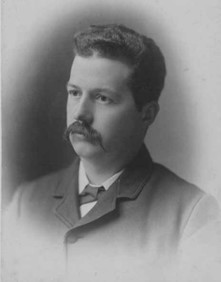 C. Hart Merriam was an enthusiastic naturalist from an early age. In 1871, at 15 years old, he provided specimens of birds and mammals he had collected in upstate New York to the U.S. National Museum of Natural History. Director of the Museum, Spencer Fullerton Baird, saw Merriman’s promise as a natural historian, and in the following year, arranged for him to join Francis V. Hayden’s Geological Survey of the Rocky Mountains as the expedition’s naturalist.
In 1874, Merriam furthered his education by studying natural history and anatomy at the Sheffield Scientific School of Yale University. He subsequently pursued an M.D. in the College of Physicians and Surgeons at Columbia University, receiving his degree in 1879. While in medical school, Merriam was a founding member of the Linnaean Society of New York and served as its first president. For the 6 years following his graduation, Merriam developed a successful medical practice in his home town of Locust Grove, New York, specializing in the diseases of women. His interest in birds and mammals, however, never waned, and Merriam spent increasing amounts of time studying mammals. In spring of 1883 the young doctor became the surgeon on the Newfoundland sealing vessel Proteus, where he collected numerous specimens for the U.S. National Museum. He became a founding member of the American Ornithologists’ Union in 1883, and later (1903) became a president of that society. He likewise was a founding member of the National Geographic Society (1888). Importantly, his two-volume publication on The Mammals of the Adirondack Region, Northeastern New York appeared in 1884.
At the age of 30, Merriam’s reputation for meticulous field studies and a vast knowledge of natural history lead to him becoming the first Chief of the newly established Division of Economic Ornithology and Mammalogy in the United States Department of Agriculture in 1885. This was later to become the Bureau of Biological Survey, which he led for 25 years. That agency ultimately became the present-day U.S. Fish and Wildlife Service within the Department of Interior. In 1886, Merriam married his secretary, Virginia Elizabeth Gosnell, who became his life-long companion and often accompanied him during his field expeditions in the western United States. Merriam promoted his protégé, Vernon Bailey, to be the Chief Field Naturalist for the Biological Survey. Bailey was renowned for his field skills, and his collections of mammals played an important role in Merriam’s research. Following Merriman’s retirement from the Bureau in 1929, he studied the ethnography of Californian Native Americans. He died in Washington, DC, in 1942.
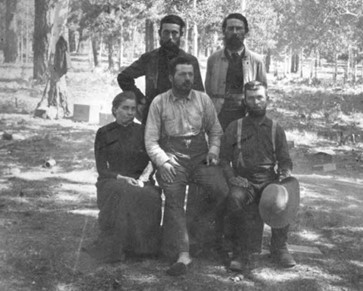 C. Hart Merriam is justifiably regarded as the father of mammalogy. He was a founding member of the American Society of Mammalogists and served as its first president (1919); he was elected to Honorary Membership in 1930, the highest honor the Society bestows. He amassed over 600 scientific publications, which helped shape the science of mammalogy, especially by improving methods of collection and research. He described 71 new species and 2 genera, and began the North American Fauna monographs. He developed the concept of "life zones" to classify the biomes of North America. His accomplishments were widely recognized. Merriam was elected a member of the National Academy of Sciences in 1902, and in 1931 received the Roosevelt Medal for distinguished work in biology from Interior Secretary James R. Garfield. It is fitting that the American Society of Mammalogists’ award for outstanding and sustained research is named in honor of C. Hart Merriam.
- Layne, J. N., and R. S. Hoffmann. 1994. Presidents. Pages 22–70 in E. C. Birney, and J. R. Choate, editors. Seventy-five years of Mammalogy (1919–1994). Special Publication No. 11, The American Society of Mammalogists.
- Osgood, W. H. 1943. Clinton Hart Merriam—1855–1942. Journal of Mammalogy 24:421–436.
- Osgood, W. H. 1944. Biographical memoir of Clinton Hart Merriam, 1855–1942. Biographical Memoirs, National Academy of Sciences of the United States of America 24:1–57.
- Schmidly, D. J. 2016. Vernon Bailey (1864–1942): chief field naturalist of the Biological Survey. Pages 25–53 in Schmidly, D. J., W. E. Tydeman, and A. L. Gardner, editors. United States Biological Survey: a compendium of its history, personalities, impacts and conflicts. Special Publications Museum of Texas Tech University No. 64, Lubbock, Texas.
- Sterling, K. B. 2016. C. Hart Merriam: pioneering mammalogists. Pages 15–24 in Schmidly, D. J., W. E. Tydeman, and A. L. Gardner, editors. United States Biological Survey: a compendium of its history, personalities, impacts and conflicts. Special Publications Museum of Texas Tech University No. 64, Lubbock, Texas.
Annual Reports
To Nominate
The C. Hart Merriam Award is given to eminent scholars in recognition of outstanding research in mammalogy over a period of at least 10 years. Nominees are typically established scientists who are actively engaged in research and who have made significant contributions to the science of mammalogy.
Please send a letter of nomination that details the nominee's contributions to research in Mammalogy (up to 2 pages), the nominee’s curriculum vita, and 3-5 additional letters of support as a single PDF to the Merriam Award Committee Chair, Sharon Jansa (jansa003@umn.edu) by 1 March. Please put "Merriam Nomination" in the subject line. Competitive nominations from the previous year will be retained, with an option to update the nomination materials.
Nominations should include a statement regarding adherence to the ASM Code of Professional Conduct. For example:
As a part of preparing this nomination, I have read and understood the American Society of Mammalogists' Code of Professional Conduct (here). To the best of my knowledge, the individual I am nominating exemplifies the high caliber of professional conduct that the ASM expects and promotes as required to be eligible for this award, as well as to retain this recognition should they be the award recipient.
Recipients
C. HART MERRIAM AWARD for outstanding research contributions to the science of mammalogy
Recent Awardees
2023—Larry Heaney, Field Museum of Natural History
|
Image
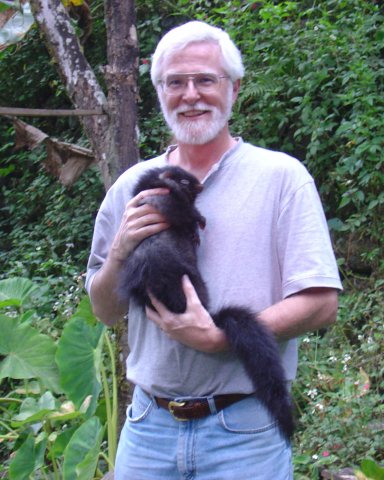 |
Larry developed his twin interests in the systematics and evolution of mammals and the long-term dynamics of mammalian diversity on islands while working as volunteer and assistant in the Division of Mammals at the Smithsonian Institution’s Museum of Natural History, as an undergraduate at the University of Minnesota, and Master’s and PhD student at the University of Kansas. He is currently the Negaunee Curator of Mammals at the Field Museum of Natural History in Chicago, and teaches and advises students at the University of Chicago and University of the Philippines, and is a Research Fellow at the Philippine National Museum of Natural History. Larry’s field-based research that began in 1981 has been conducted in collaboration with Philippine museums, universities, conservation organizations, and government agencies. This has included training for dozens of young and mid-career Filipino biologists in the Philippines and the US, and led to the founding of the Biodiversity Conservation Society of the Philippines in 1992, from which he received a Lifetime Achievement Award in 2022. The project’s combination of intensive, comprehensive field research and museum-based morphometric and genetic studies has shown that the Philippine Islands have the one of the world’s greatest concentrations of endemic mammals; well over 200 species are now known. He and his collaborators have learned that rare events, including rafting from the Asian mainland beginning about 16 million years ago, have allowed several groups of small mammals to diversify greatly, producing many highly distinctive animals that occur in ecologically complex communities. These studies, including discovery of about 50 previously unknown species of mammals, have produced unexpected insights into the ecological and evolutionary processes that produce diversity of mammals world-wide. They also have had substantial impact on promoting conservation in this heavily deforested tropical country, providing much of the baseline for assessments of conservation status of endemic mammals, and contributing to the establishment of many national parks. For more information, please see https://www.philippinemammalproject.com/. |
- 1976—James N. Layne, Archbold Biological Station, University of Florida, and Cornell University
- 1977—J. Knox Jones, Jr., Texas Tech University and University of Kansas
- 1978—James S. Findley, University of New Mexico
- 1979—Terry A. Vaughan, Northern Arizona University and Colorado State University
- 1980—Robert J. Baker, Texas Tech University
- 1981—John F. Eisenberg, University of Florida, National Zoological Park, University of Maryland, and University of British Columbia
- 1983—James L. Patton, Museum of Vertebrate Zoology, University of California, Berkeley
- 1985—Michael H. Smith, Savannah River Ecology Laboratory and University of Georgia
- 1986—William Z. Lidicker, Jr., Museum of Vertebrate Zoology, University of California, Berkeley
- 1987—Hugh H. Genoways, University of Nebraska State Museum, Carnegie Museum of Natural History, and Texas Tech University
- 1988—Jerry R. Choate, Sternberg Museum of Natural History, Fort Hays State University
- 1989—James H. Brown, University of New Mexico, University Arizona, University of Utah, and UCLA
- 1991—Timothy H. Clutton-Brock, Cambridge University, Cambridge, England
- 1992—Guy G. Musser, Department of Mammalogy, American Museum of Natural History
- 1993—Charles J. Krebs, University of British Columbia
- 1994—Gail R. Michener, University of Lethbridge
- 1995—M. Brock Fenton, York University
- 1996—Katherine Ralls, National Zoological Park
- 1997—Kenneth B. Armitage, University of Kansas
- 1998—Thomas H. Kunz, Boston University
- 1999—Carleton J. Phillips, Texas Tech University, Illinois State University, and Hofstra University
- 2000—Michael A. Mares, Sam Noble Oklahoma Museum of Natural History, University of Oklahoma, and University of Pittsburgh
- 2001—Theodore H. Fleming, University of Miami
- 2002—George O. Batzli, University of Illinois
- 2003—R. Terry Bowyer, University of Alaska, Fairbanks
- 2004—O. J. Reichman, National Center for Ecological Analysis and Synthesis, University of California, Santa Barbara
- 2005—Kay E. Holekamp, Michigan State University
- 2006—David Macdonald, Oxford University
- 2007—Robert S. Hoffmann, National Museum of Natural History, Smithsonian Institution and University of Kansas
- 2008—Christopher Dickman, University of Sydney
- 2009—Richard Ostfeld, Cary Institute of Ecosystem Studies
- 2010—Gerardo Ceballos, Universidad Nacional Autonoma de México
- 2012—James Estes, University of California, Santa Cruz and USGS
- 2013—Rudy Boonstra, University of Toronto
- 2014—Denise Dearing, University of Utah
- 2015—Bruce Patterson, The Field Museum of Natural History
- 2016—Joel S. Brown, University of Illinois at Chicago
- 2017—Mark S. Boyce, University of Alberta
- 2018—Stan Boutin, University of Alberta
- 2019—Hopi E. Hoekstra, Harvard University
- 2020—Jean-Michel Gaillard, Leon University
- 2021—Michael R. Willig, University of Connecticut
- 2022—Felisa Smith, University of New Mexico
- 2023—Larry Heaney, Field Museum of Natural History
- 2024—Felicia Keesing, Bard College
- 2025—Nancy Simmons, American Museum of Natural History
- 2026—Ulyses F. J. Pardiñas, National University of La Plata